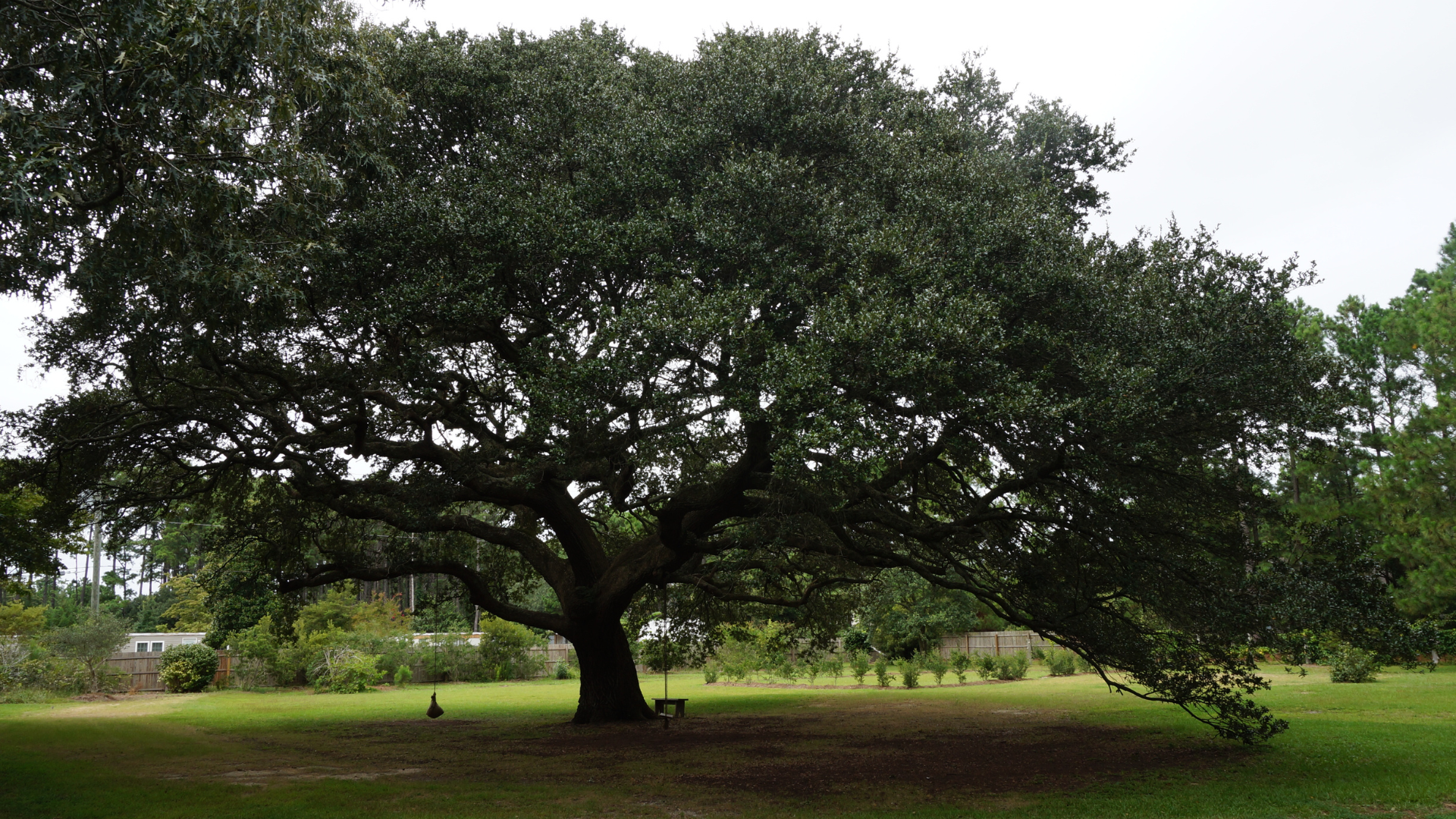
How to Identify Tree-of-Heaven and Why Professional Removal Matters
Tree-of-heaven sounds harmless, but Ailanthus altissima is an aggressive invasive tree that has become established throughout much of the United States, including the Midwest.
Originally native to China and Taiwan, tree-of-heaven was introduced to the United States in the late 1700s as an ornamental tree. Its ability to tolerate poor soil, pollution, disturbed ground, and difficult urban conditions helped it spread far beyond cultivated landscapes. Today, it can be found along roadsides, rail corridors, vacant lots, woodland edges, and other disturbed areas throughout the Midwest.
Knowing how to recognize it is important because removing it incorrectly can actually make the infestation worse.
Look Closely at the Leaves
Tree-of-heaven has very large compound leaves made up of numerous individual leaflets.
A single leaf can contain roughly 10 to 40 or more leaflets arranged along a central stem. Near the base of each leaflet are distinctive glandular teeth or notches that can help separate tree-of-heaven from similar-looking native species.
Crushing the foliage is another useful clue. The leaves can produce a strong, unpleasant odor that has sometimes been compared to rancid or burnt peanut butter.
Do Not Confuse It With Native Trees
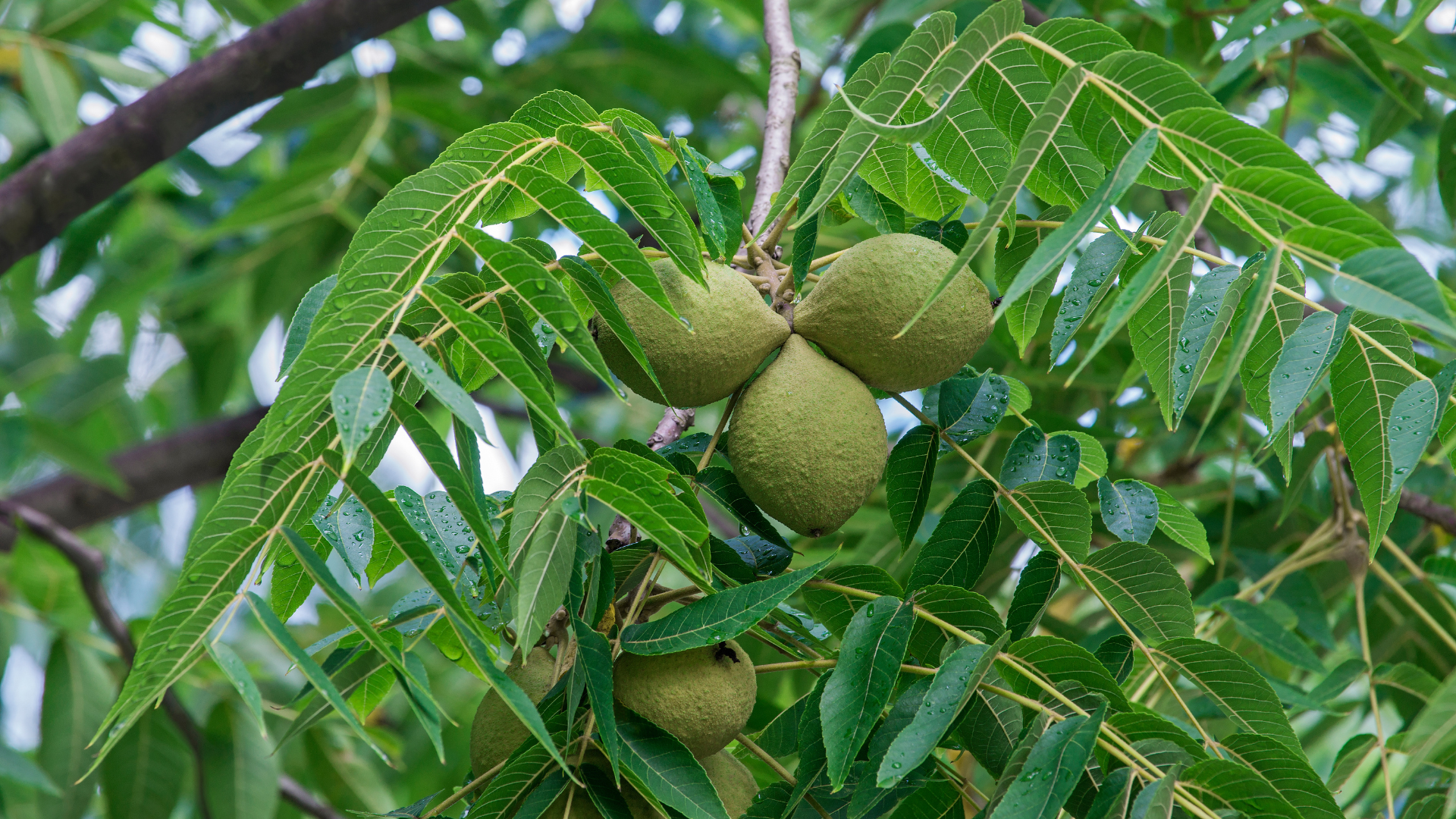
Accurate identification matters because tree-of-heaven can resemble valuable native species.
Black walnut and several sumacs, for example, also have compound leaves and may look similar from a distance.
Tree-of-heaven typically has relatively smooth leaflet margins except for the glandular teeth near the base. Mature trees also develop grayish bark, while younger stems tend to be smoother.
A certified arborist can help confirm the species before any removal work begins, reducing the risk of accidentally removing a desirable native tree.
Tree-of-Heaven Can Grow Extremely Fast
Rapid growth is one reason this species can dominate disturbed sites.
The U.S. Forest Service describes tree-of-heaven as one of the fastest-growing trees in North America. Root sprouts and shoots produced after damage can grow especially quickly, with some sprouts documented at several feet in a single growing season.
It can also reach substantial height, with mature specimens commonly reaching around 80 feet under favorable conditions.
Fast growth allows young tree-of-heaven plants to compete aggressively for sunlight and growing space.
Cutting It Down Can Make the Problem Worse
This is where tree-of-heaven management becomes difficult.
Simply cutting the trunk at ground level is generally not an effective control strategy.
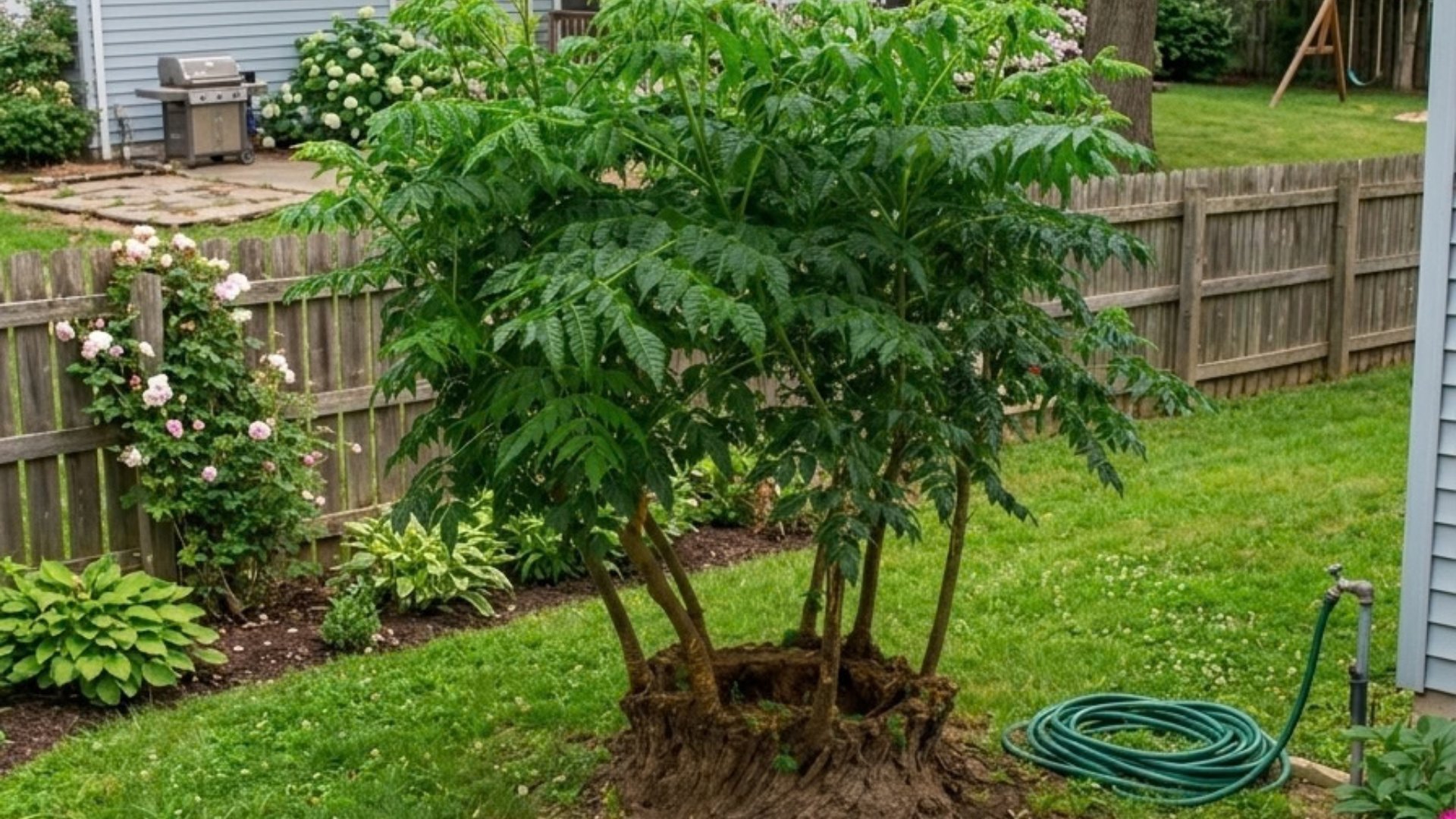
When the main stem is injured or killed, the root system can respond by producing numerous new shoots from the stump and surrounding roots. Those root suckers may emerge well away from the original trunk. The Forest Service reports that sprouts can sometimes appear 50 to 90 feet from the parent stem.
Instead of eliminating one tree, an improperly timed removal can potentially lead to a cluster of vigorous new stems.
Penn State Extension specifically warns that mechanical cutting alone is ineffective because tree-of-heaven responds by producing stump sprouts and root suckers.
Its Root System Helps It Spread
Tree-of-heaven does not rely only on seeds.
Its extensive root system allows established trees to spread clonally, forming colonies of genetically connected stems.
Female trees can also produce very large numbers of wind-dispersed seeds, giving the species another way to colonize roadsides, open ground, and disturbed landscapes.
This combination of rapid growth, seed production, and aggressive root sprouting makes tree-of-heaven particularly difficult to manage once established.
Why a Certified Arborist Should Handle the Problem
Tree-of-heaven removal requires more planning than simply cutting and grinding the trunk.
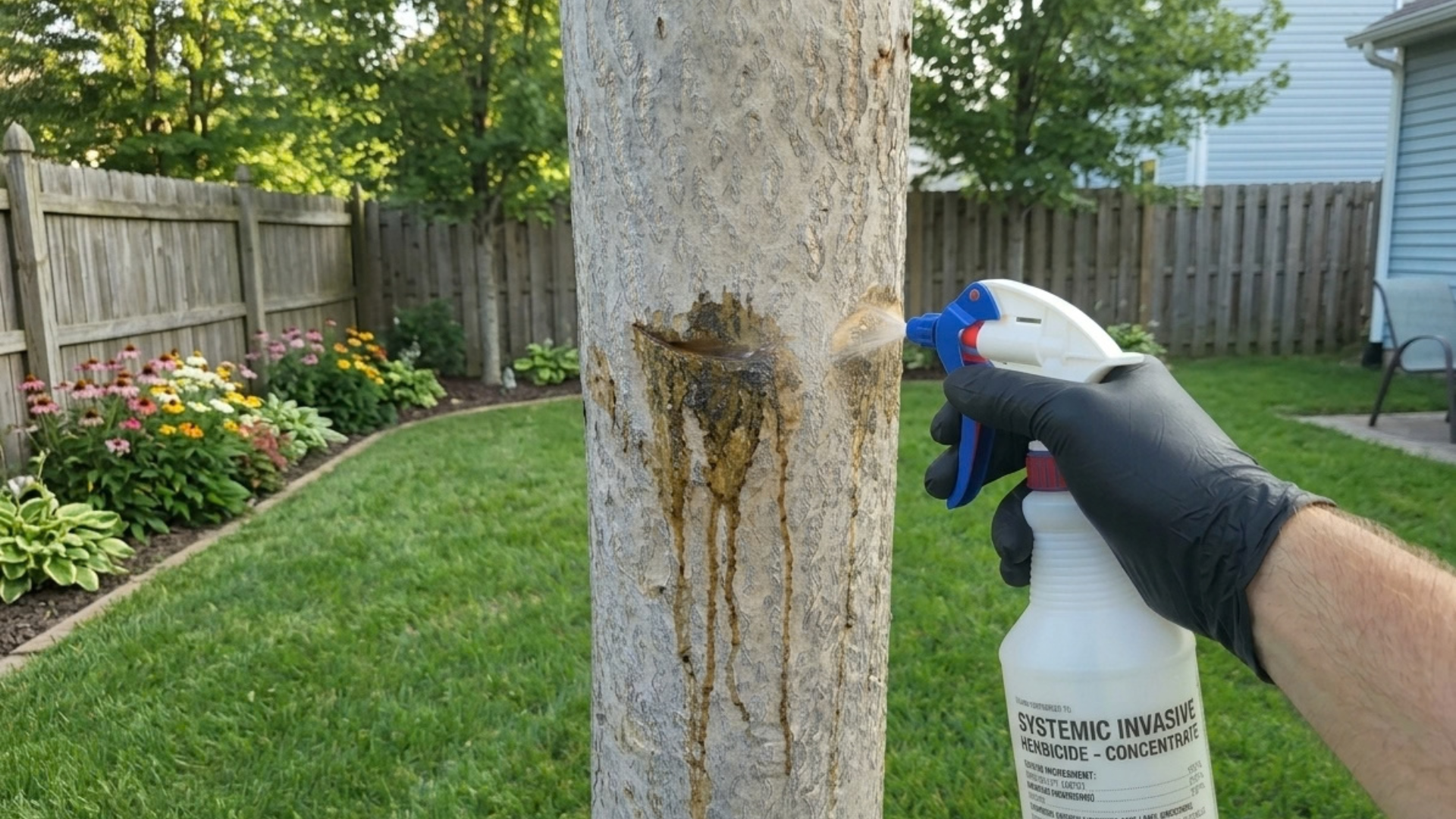
Depending on the size, location, season, and extent of the infestation, management may involve staged treatment designed to weaken or kill the root system before the tree is physically removed.
Because incorrect treatment can trigger aggressive resprouting, homeowners should work with a certified arborist or qualified tree-care professional experienced with invasive species.
An arborist can confirm identification, evaluate nearby root sprouts, determine whether multiple trunks belong to the same colony, and develop an appropriate control and follow-up strategy.
Deal With Tree-of-Heaven Before It Spreads Further
Tree-of-heaven can grow quickly, spread through both seeds and roots, and respond aggressively when simply cut down.
If you have noticed a fast-growing tree with large compound leaves, unusual-smelling foliage, or multiple shoots appearing around the parent tree, have it identified before attempting removal.
Midwest Tree Surgeons can help homeowners evaluate unwanted and potentially invasive trees and determine the safest approach to management. Contact Midwest Tree Surgeons if you suspect tree-of-heaven is growing on your property and want professional guidance before it has a chance to spread further.