How Bagworms Can Damage Evergreens
Evergreens are often valued because they provide year-round color, screening, and structure in the landscape. When sections of an arborvitae, juniper, spruce, or similar evergreen suddenly begin turning brown or losing foliage, however, bagworms may be responsible.
Bagworms are caterpillars that construct protective bags from silk and pieces of the plants they are feeding on. Because those bags blend into surrounding foliage, an infestation can become significant before the insects attract much attention.
Understanding how bagworms feed and when they are easiest to control can help protect valuable trees and shrubs from unnecessary damage.
The Bags Can Be Easy to Miss
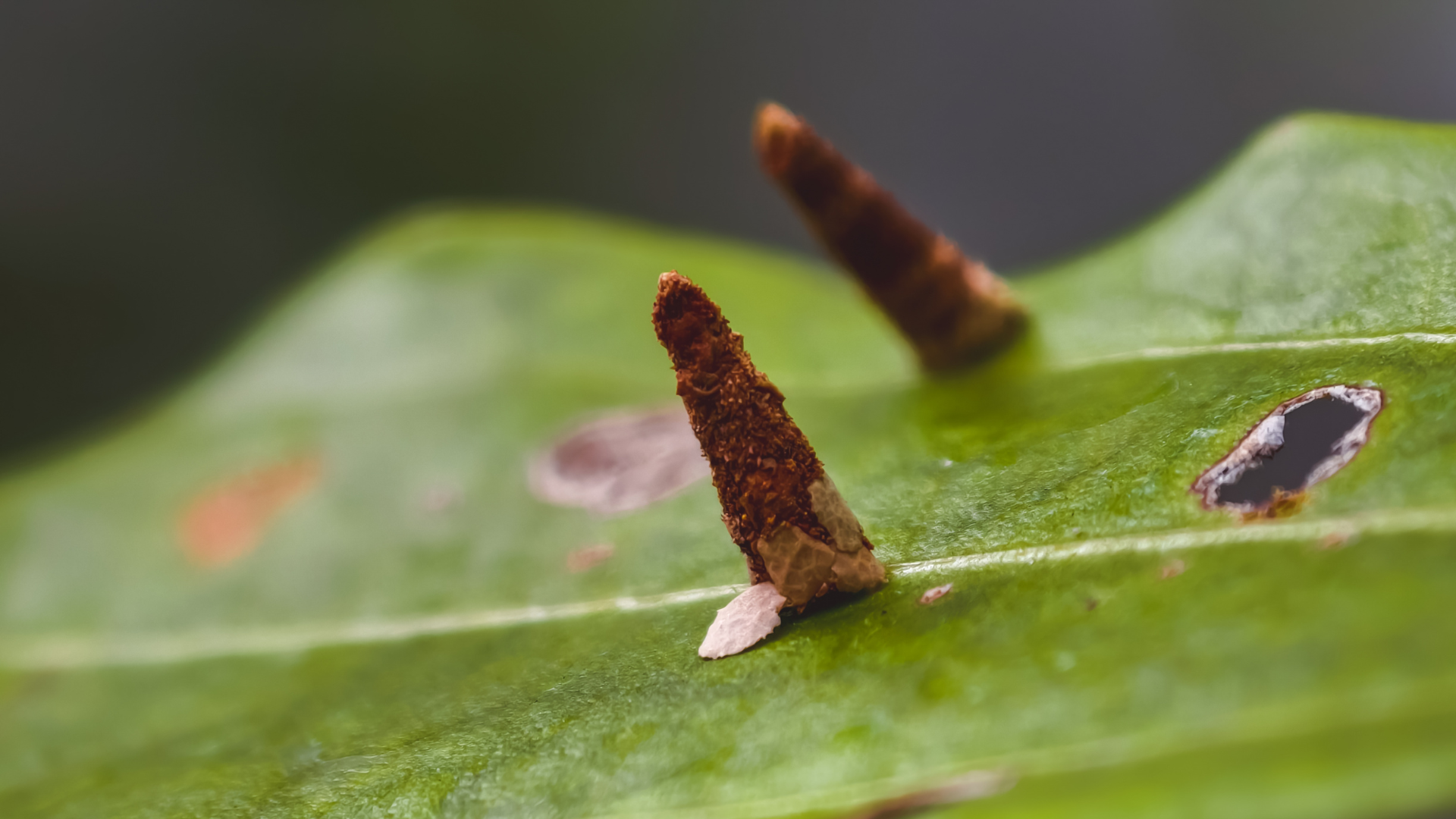
Bagworms get their name from the portable cases they build around themselves.
As the larvae feed, they add pieces of needles, leaves, and twigs to the outside of the bag. This camouflage can make them difficult to recognize, particularly when populations are still relatively small.
The bags may look like small brown cones or pieces of dried vegetation hanging from the branches.
Penn State Extension notes that bagworms can become serious pests on arborvitae, juniper, spruce, fir, and other conifers because substantial feeding damage can occur before the infestation becomes obvious.
Young Bagworms Begin Feeding in Late Spring
Bagworms overwinter as eggs inside bags left behind from the previous season.
Those eggs typically hatch in late spring or early summer, with exact timing depending on temperature and local conditions. Newly hatched larvae are extremely small and may spread to neighboring plants by producing silk threads that allow them to be carried by the wind.
Once established on a plant, they begin feeding and constructing their bags.
Young larvae initially remove small portions of foliage, but the amount they consume increases as they grow.
Evergreens Can Be Especially Vulnerable
Bagworms can feed on many different plant species, but the damage can be particularly serious on needled evergreens.
As larvae mature, they can consume entire needles and strip foliage from individual twigs. Heavy populations may partially or completely defoliate sections of the plant.
Evergreens do not always replace lost foliage as readily as many deciduous trees.
For that reason, severe defoliation can leave permanent thin areas or contribute to long-term decline, particularly when the plant is already under stress from drought, poor soil, root problems, or other pests.
Brown Areas May Be the First Obvious Symptom
Homeowners often notice the damage before they notice the insects.
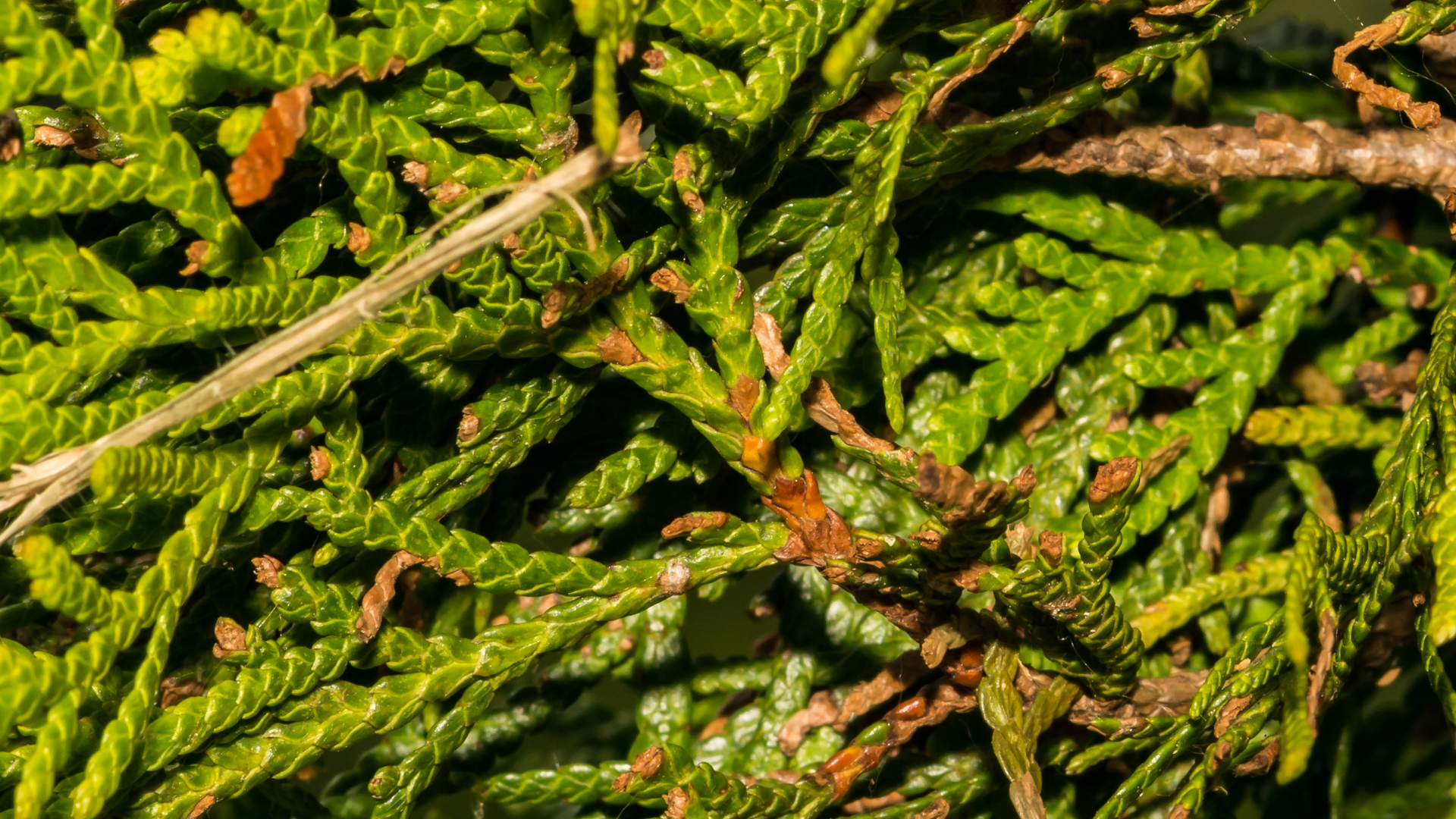
Sections of an arborvitae or spruce may begin turning brown, appearing thin, or losing foliage while surrounding areas remain green.
Closer inspection may reveal numerous bags hanging from affected branches.
By the time large bags are clearly visible later in summer, the larvae may already have consumed a substantial amount of foliage.
That is why routine inspection is more useful than waiting for widespread browning.
Timing Matters for Management
Bagworms are generally easier to manage when the larvae are small.
Penn State Extension reports that early-stage larvae are more susceptible to treatment, while control becomes increasingly difficult as the insects grow and their protective bags become larger.
On smaller trees or shrubs with limited infestations, removing and destroying bags by hand can sometimes reduce the next generation, particularly when this is done before eggs hatch.
Larger trees or widespread infestations may require a different approach.
Because timing, plant species, infestation severity, and treatment options all matter, proper identification should come before attempting control.
Do Not Assume Every Brown Evergreen Has Bagworms
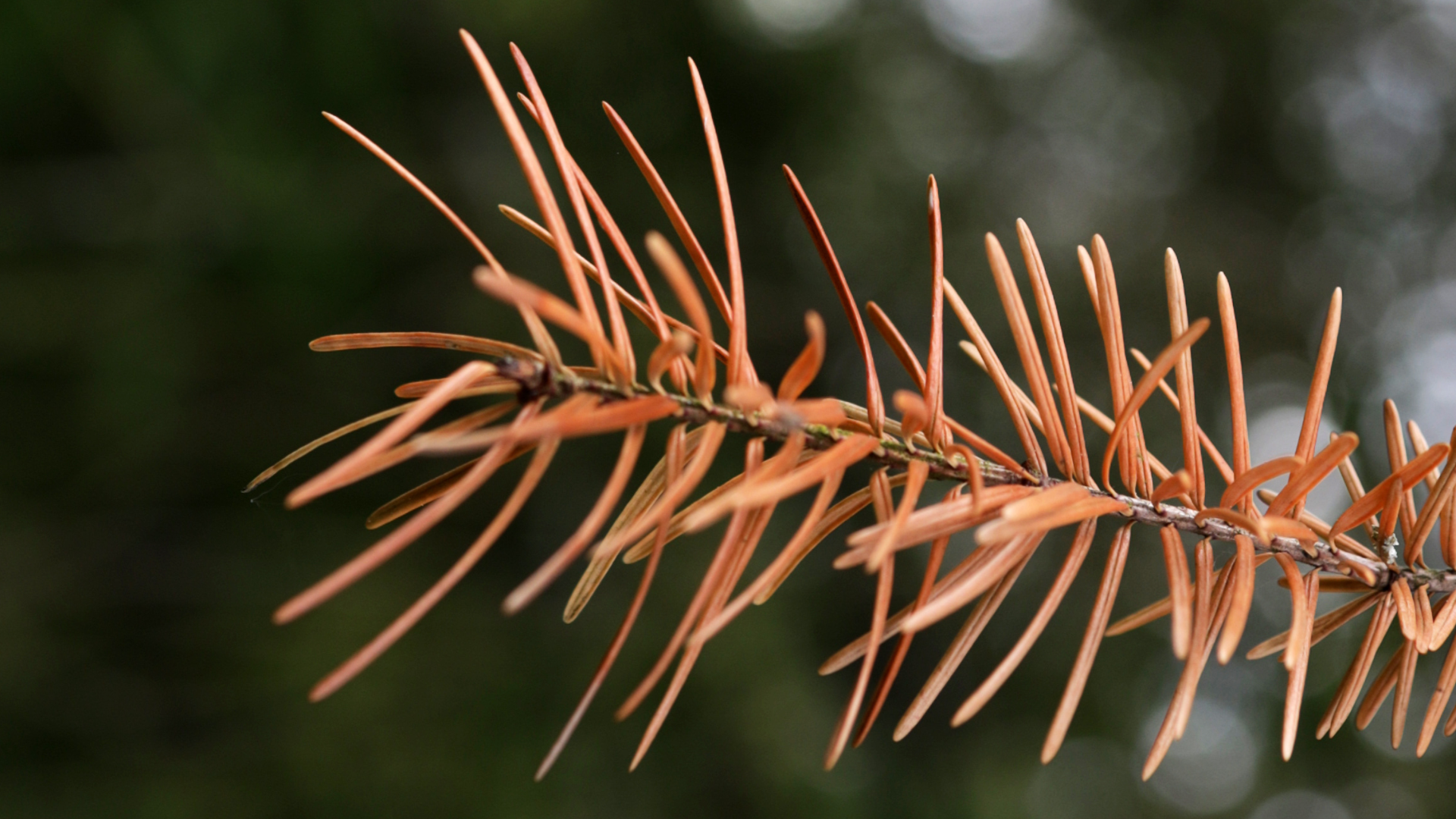
Browning foliage can have many causes.
Drought stress, root problems, winter injury, spider mites, fungal diseases, and other environmental conditions can sometimes produce similar symptoms.
Treating for bagworms when another problem is responsible wastes time and may allow the real issue to continue.
A careful tree-health assessment can help distinguish insect feeding from disease or environmental stress.
Catch the Problem Before Defoliation Becomes Severe
Bagworms can remain surprisingly inconspicuous while causing significant damage to evergreens.
Regular inspection of arborvitae, juniper, spruce, fir, and other susceptible plants can help identify infestations while they are still manageable.
Midwest Tree Surgeons provides professional tree care, pruning, pest evaluation, plant-health services, risk assessment, and removal when necessary.
If an evergreen is developing unexplained brown areas, thinning foliage, or suspicious hanging bags, contact Midwest Tree Surgeons for an evaluation. Identifying the problem early can help determine whether bagworms are responsible and what steps may be appropriate to protect the plant.