How Japanese Beetles Affect Trees During the Summer Months
Summer brings plenty of activity to the landscape, but not all of it is beneficial. While homeowners often focus on watering, mowing, and maintaining their outdoor spaces during the warmer months, another seasonal visitor can create significant problems for trees and plants: the Japanese beetle.
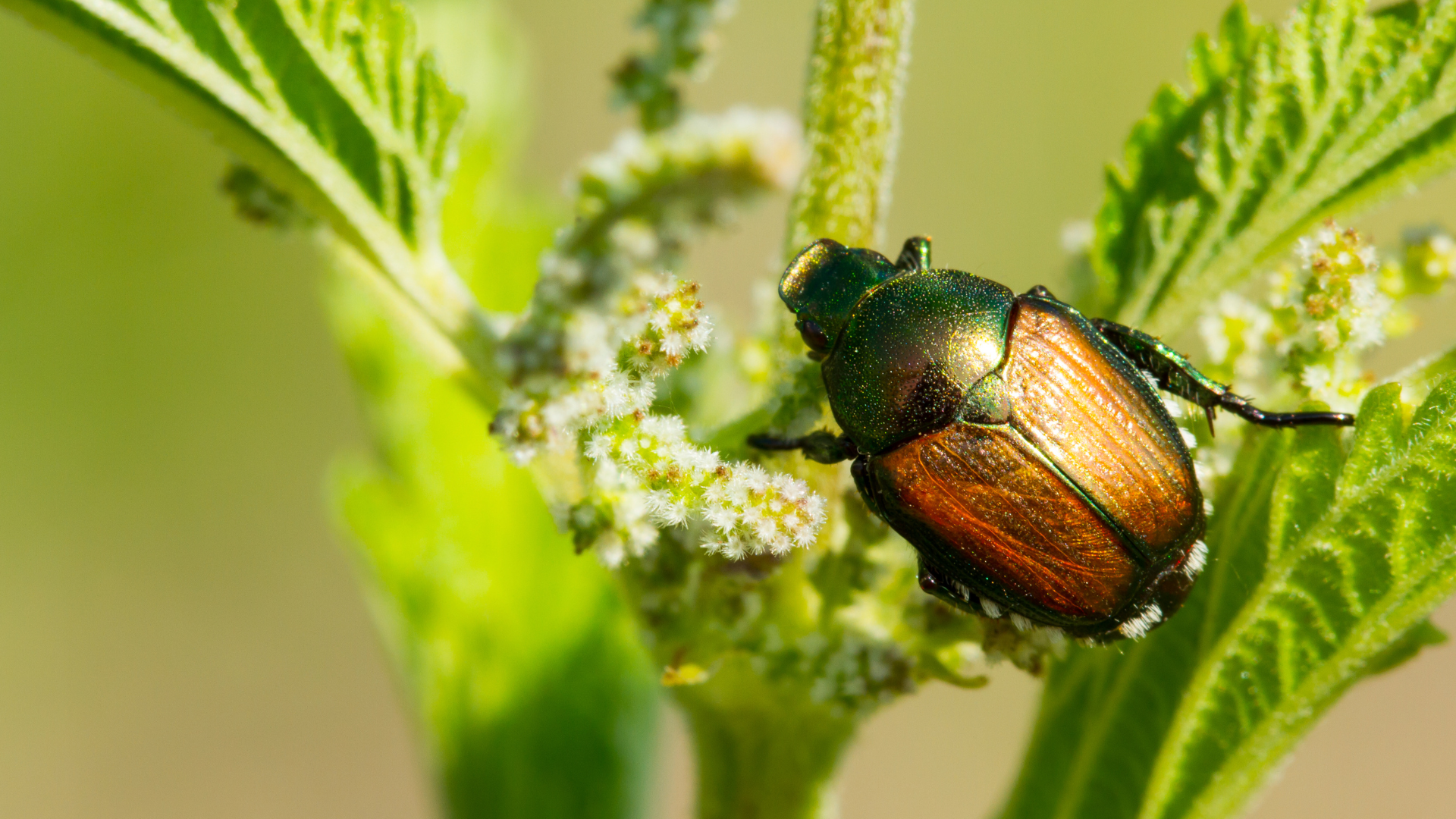
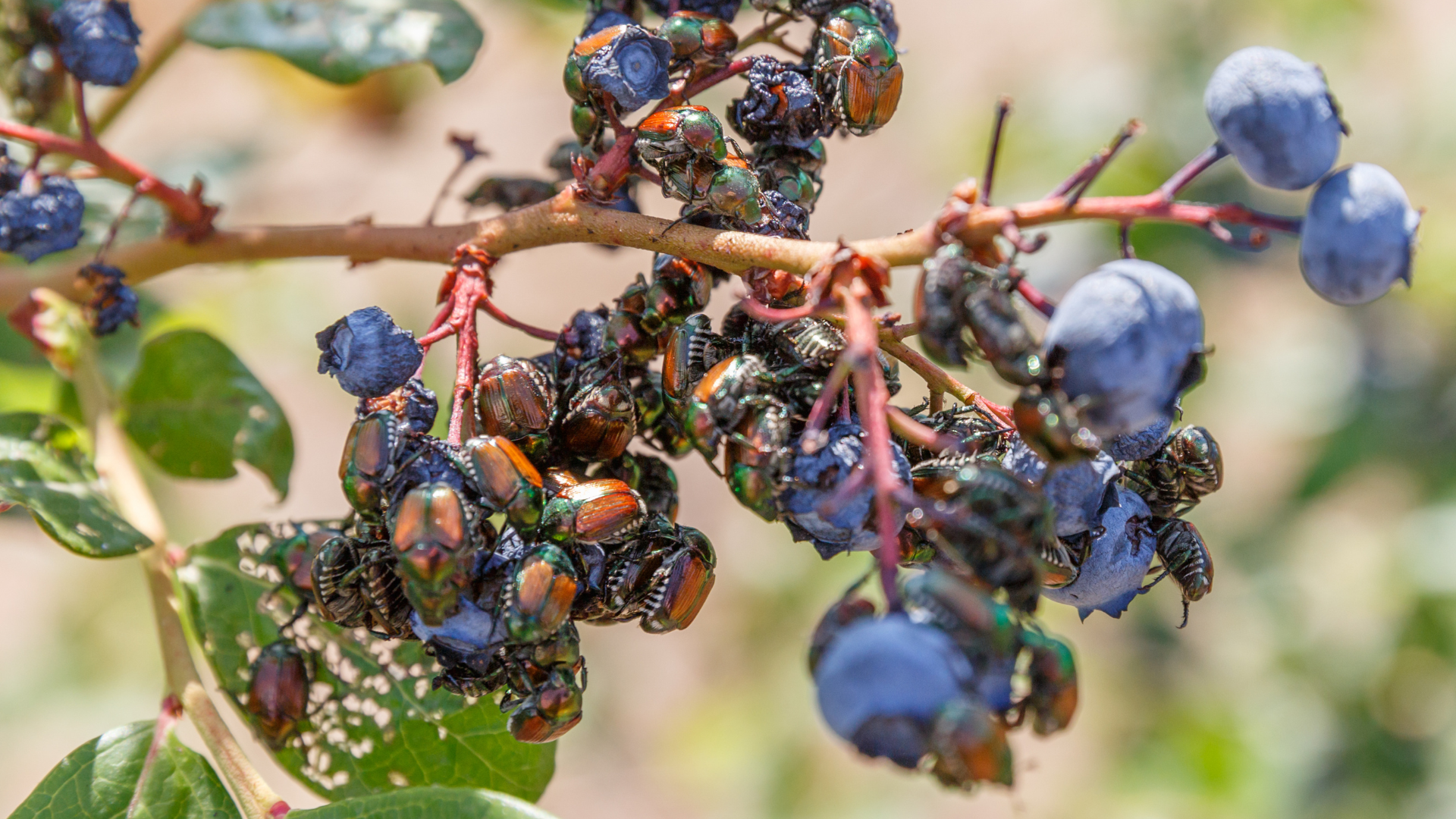
Japanese beetles are among the most recognizable insect pests found throughout much of the Midwest. Their metallic green bodies and copper-colored wings make them easy to identify, but the damage they leave behind is often what attracts the most attention. During peak summer months, large populations of these insects can feed on a variety of trees and ornamental plants, affecting both appearance and overall plant health.
Understanding how Japanese beetles impact trees can help homeowners recognize potential problems and determine when professional assistance may be beneficial.
What Are Japanese Beetles?
Japanese beetles are an invasive insect species that feed on hundreds of different plant varieties. Adult beetles typically emerge during the summer and remain active for several weeks as they feed, reproduce, and lay eggs.
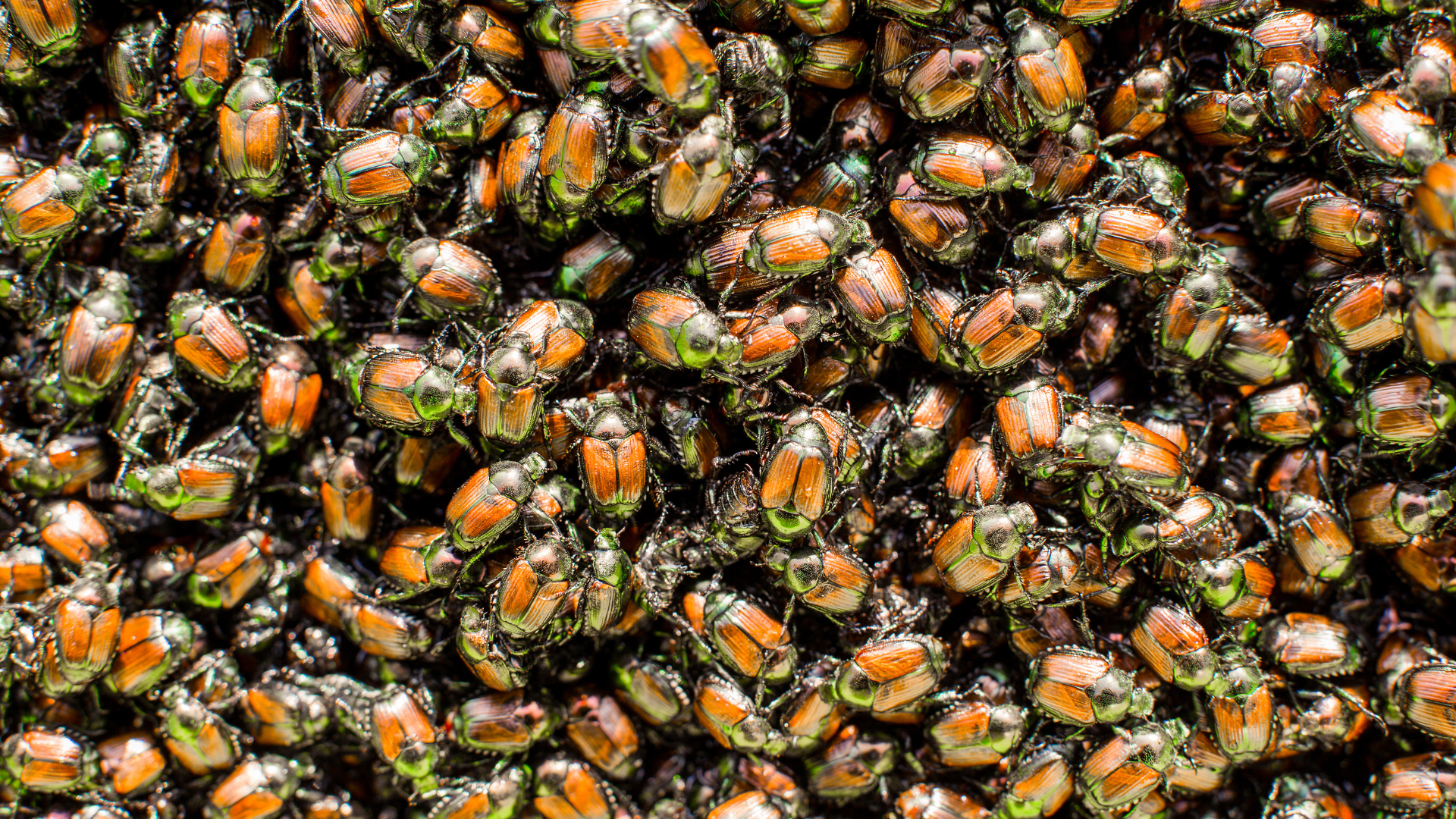
One of the reasons Japanese beetles can become such a concern is their tendency to gather in large numbers. While a few beetles may not cause significant damage, concentrated feeding by large populations can quickly affect the appearance of trees and landscape plants.
How Japanese Beetles Damage Trees
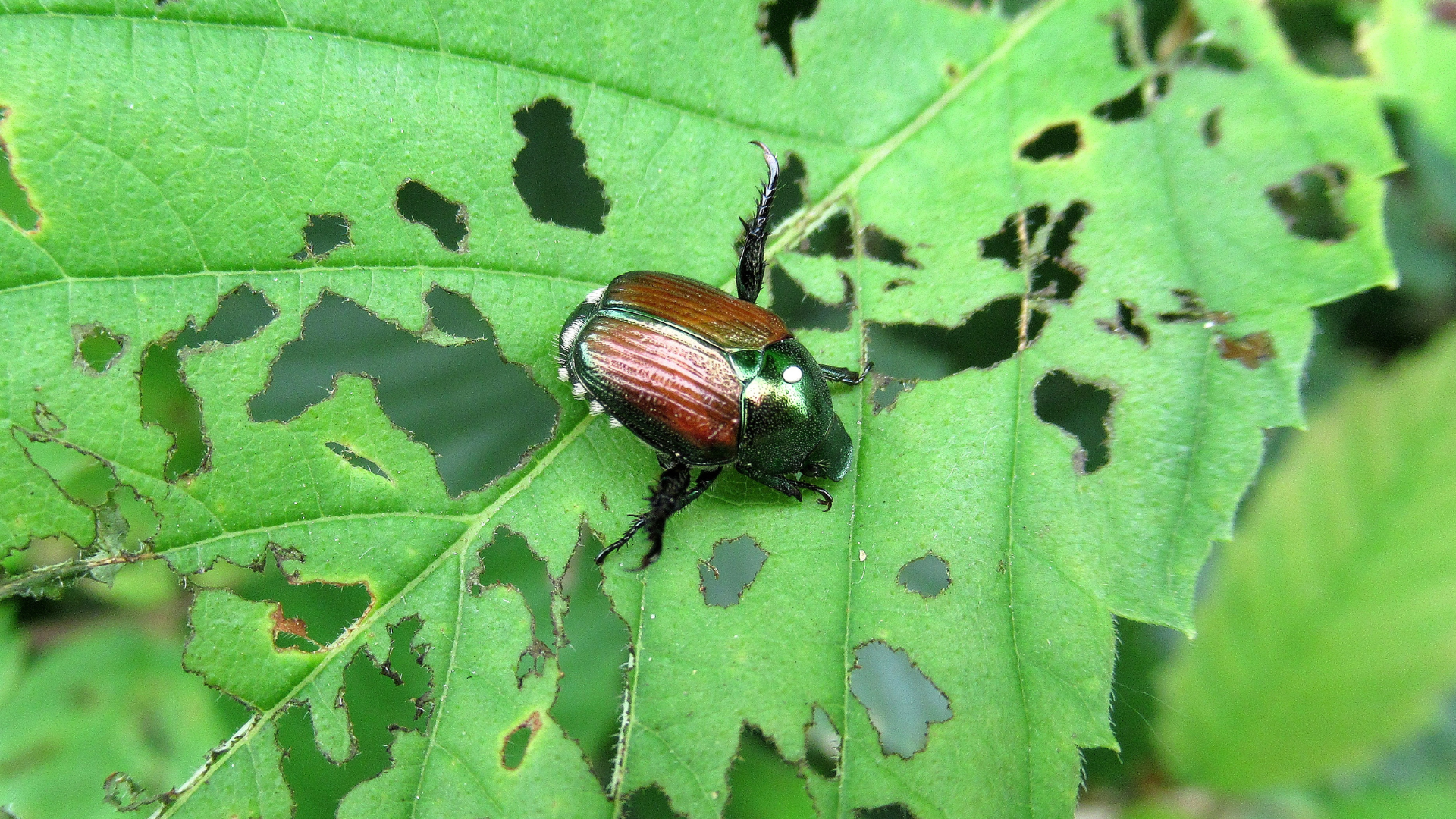
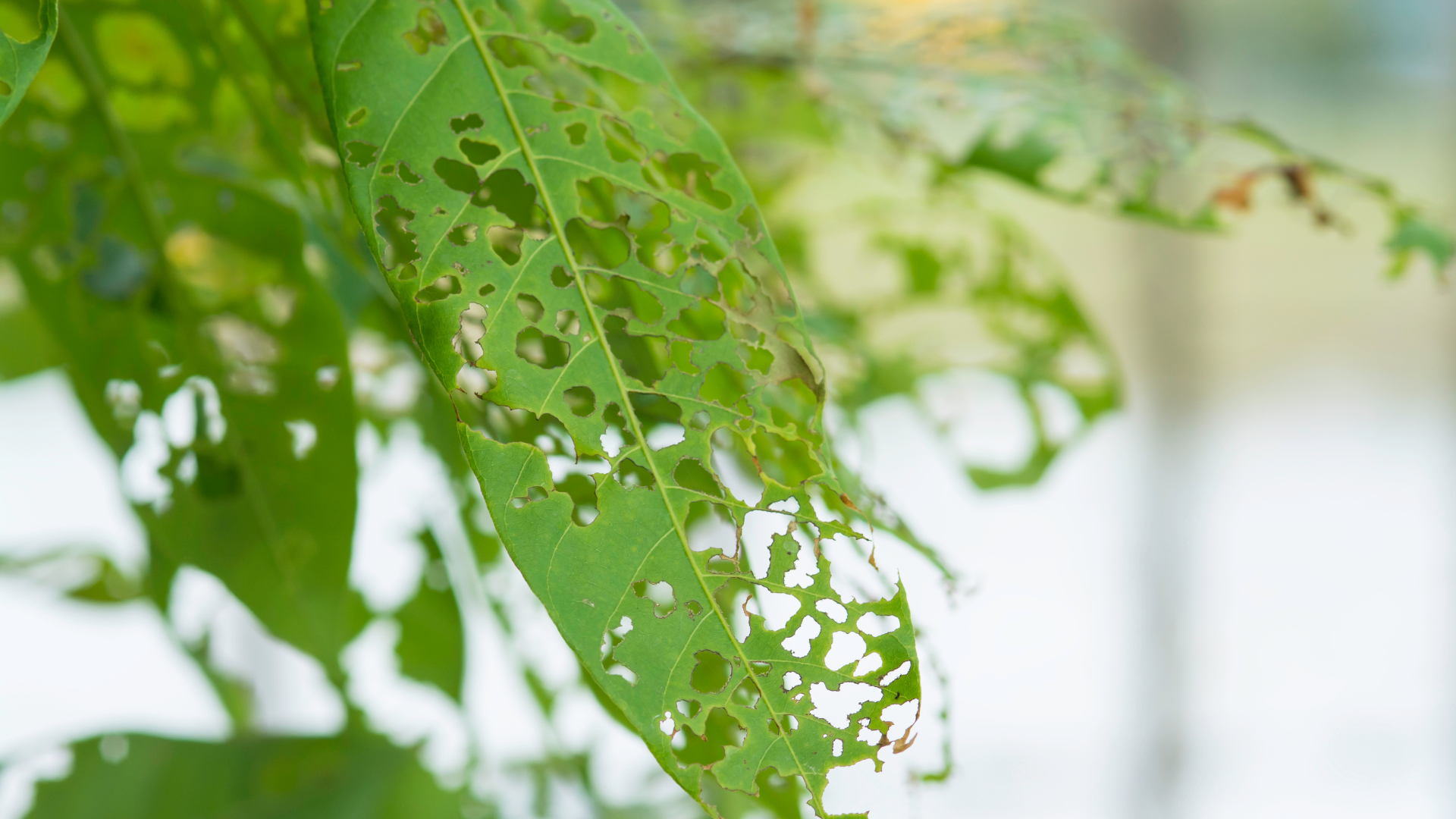
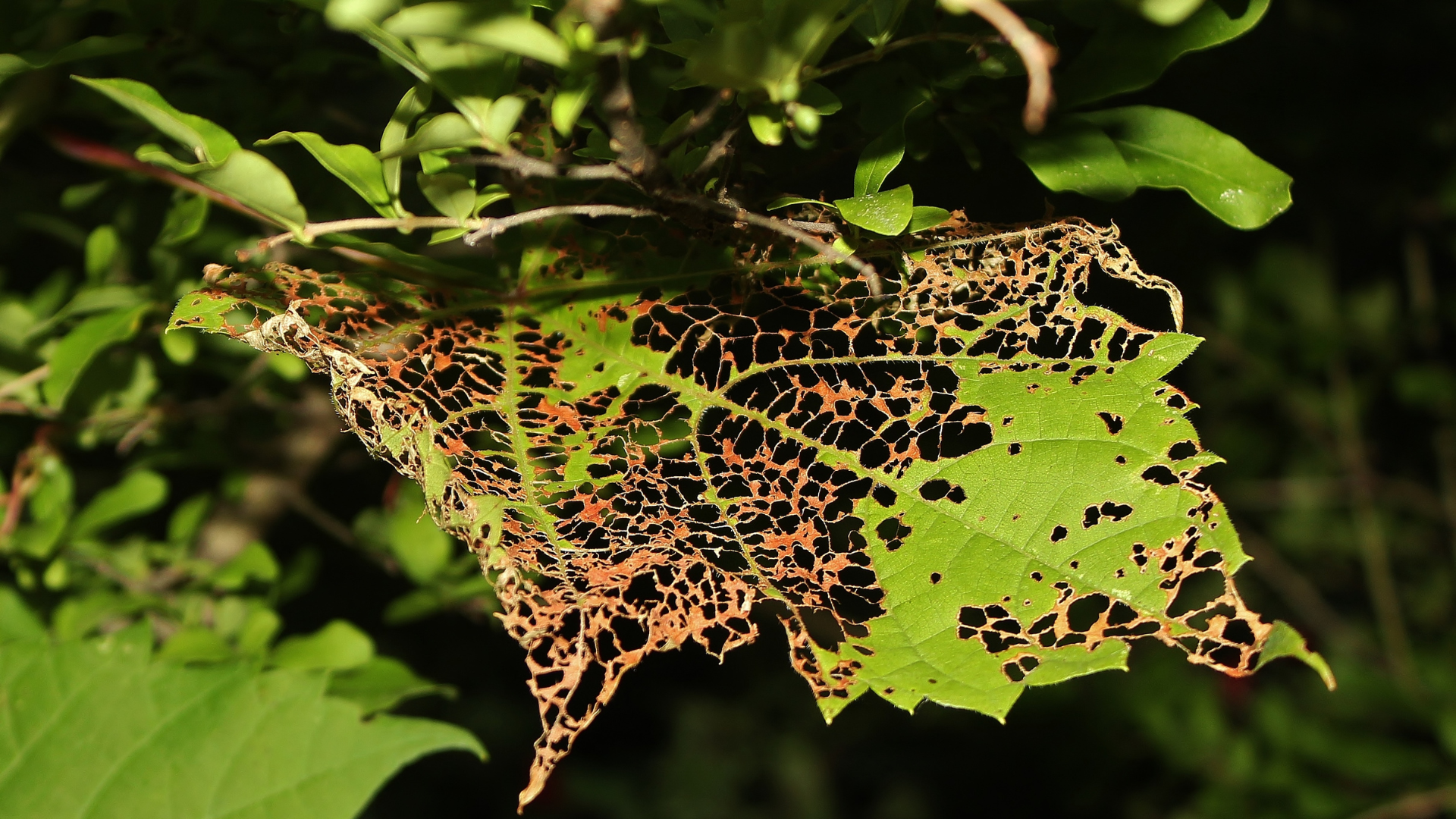
Japanese beetles feed on leaf tissue, often consuming the soft material between leaf veins while leaving portions of the vein structure behind.
This type of feeding creates a distinctive “skeletonized” appearance. Instead of a healthy green leaf surface, affected leaves may appear lacy, thin, or partially transparent.
As feeding continues, trees may develop a noticeably damaged appearance, particularly when infestations are widespread.
Homeowners often first notice the problem when leaves begin looking ragged or unusually thin during the middle of the growing season.
Common Trees Affected by Japanese Beetles
Japanese beetles are not particularly selective feeders. They are known to feed on numerous tree species as well as shrubs, flowers, and ornamental plants.
Some commonly affected landscape trees include:
- Maple trees
- Birch trees
- Crabapple trees
- Linden trees
- Various fruit trees
The level of damage can vary depending on local beetle populations, environmental conditions, and the overall health of the tree.
Healthy Trees Often Recover
Fortunately, healthy, established trees can often tolerate moderate Japanese beetle feeding without suffering long-term damage.
Trees have natural defense mechanisms and can usually continue functioning even after some foliage loss. While the appearance of the tree may be affected during the feeding period, many healthy trees produce new growth and recover once beetle activity declines.
However, repeated infestations or severe feeding can place additional stress on trees that are already struggling with other challenges.
Stressed Trees Face Greater Risks
Trees experiencing drought stress, root damage, disease, or other environmental pressures may be less capable of handling significant insect activity.
When Japanese beetles feed on already stressed trees, the combined effects can contribute to additional decline. Reduced leaf surface area may limit the tree’s ability to produce energy through photosynthesis, potentially affecting overall vigor.
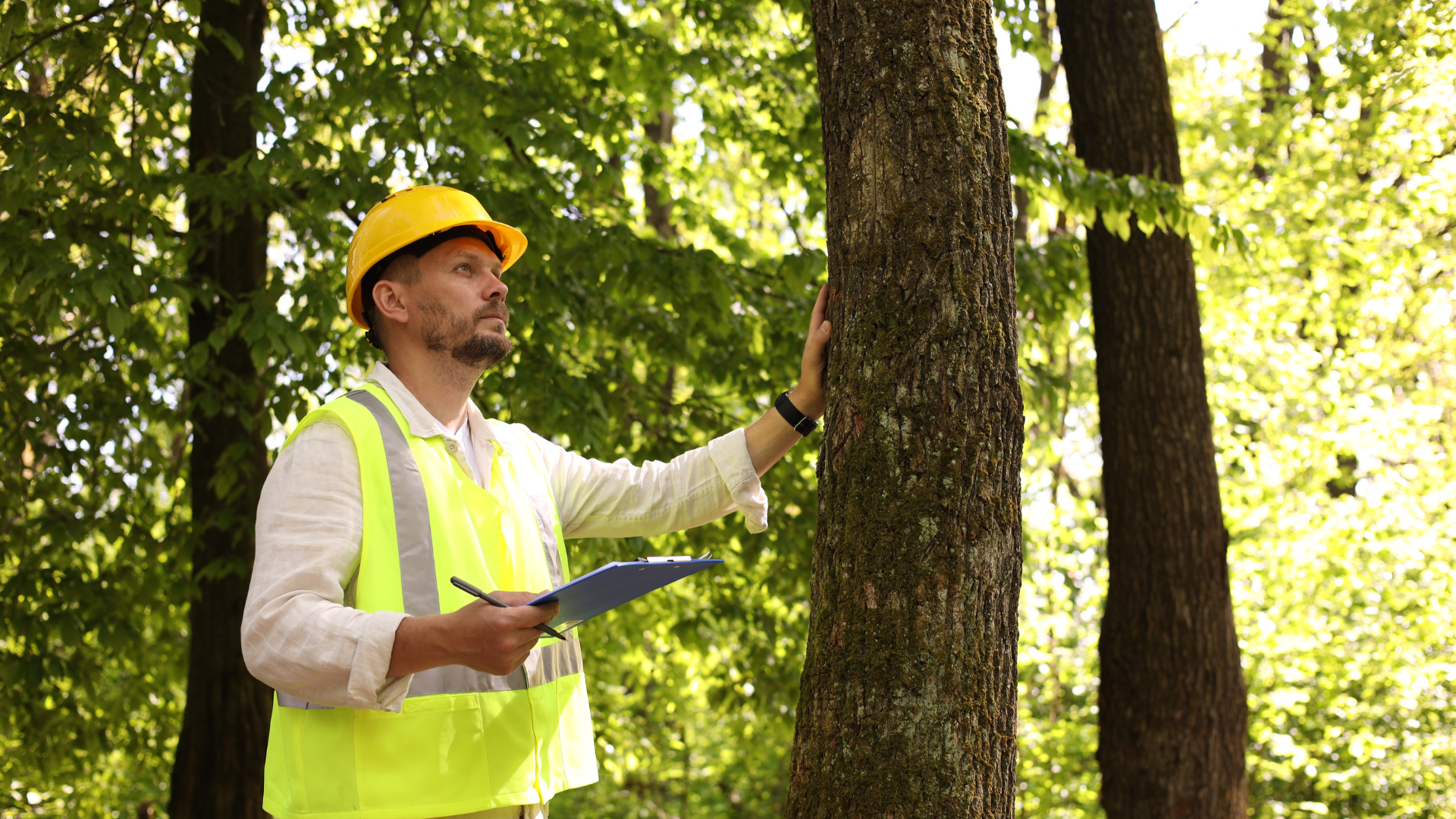
This is one reason professional tree evaluations can be valuable when homeowners notice recurring insect problems.
Monitoring Matters
Japanese beetle populations can fluctuate from year to year. Some summers bring relatively minor activity, while others produce widespread infestations.
Regular observation helps homeowners identify problems before significant damage occurs. Monitoring foliage for feeding activity, unusual leaf appearance, or clusters of beetles can provide early warning signs that intervention may be needed.
The earlier an issue is identified, the more options may be available for managing the situation.
Protecting Valuable Landscape Trees
Japanese beetles are a common part of summer in many Midwestern communities, but that does not mean their impact should be ignored. While healthy trees often recover from moderate feeding, severe infestations can affect appearance, contribute to stress, and create concerns for valuable landscape trees.
Midwest Tree Surgeons helps homeowners evaluate tree health, identify insect-related concerns, and develop strategies for protecting trees from seasonal pests. Whether dealing with Japanese beetles, borers, mites, or other insect threats, professional tree care can help preserve the health and longevity of important landscape assets.
Summer pests may be a recurring challenge, but proactive tree care can help ensure your trees remain healthy and resilient year after year.